68kMLA Classic Interface
This is a version of the 68kMLA forums for viewing on your favorite old mac. Visitors on modern platforms may prefer the main site.
| Click here to select a new forum. | |
| Radius PIVOT IIsi Inteface and Mac SE external display | |
| Posted by: MIRKOSOFT on 2017-03-24 07:59:28 Hi! I'm newbie in Mac world. I want to add to my Mac SE external display. So, I bought Radius PIVOT IIsi Inteface and own UnimacFly adapter. Really don't know how to made it - even one man told me that through this interface is possible to upgrade CPU - for example upgrade MC68000 by MC68020... But really it is not important. What I want at least: External display - can be mirror of main desktop on Mac SE What a hardware I have: Radius card details: PIVOT IIsi Inteface ©1990 Radius radius 297-0309 1437F0032 9234NAS CLR/PVT V2.6 0048-2A 820-0066-B 0454 9243D2 UHB249000194 Free socket U28  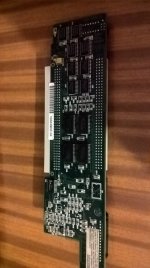 Here's detail of free socket U28:  and UnimacFly adapter supporting these modes: VGA 640×480 4:3 13" 640×480 4:3 16" 832×624 4:3 19" 1024×768 4:3 21" 1152×870 4:3 13"/14"/17"/21" Multi Res   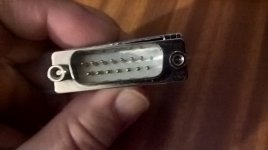 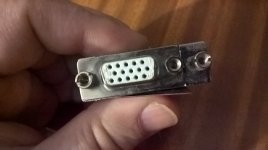 Can anybody help me? Please like beginner... Thank you very much! Miro | |
| Posted by: joethezombie on 2017-03-24 08:45:08 The IIsi Radius card will not work in an SE. It will work in an SE/30 if you can devise a way to make it fit. | |
| Posted by: Trash80toHP_Mini on 2017-03-24 09:11:35 Dunno if it's possible, but you've got my attention with this one. You'll need to: __figure out if it's even possible and then how to dumb that 120 line 68030 PDS interface down to the SE's 96 line 68000 interface. __if that works the only way I can see to get the hack to fit is an L shaped vertical adapter card __if that works, an SE/30 or late model SE Chassis will be required if you're not comfy with sheet metal hackage __figure out if the FPU/Socket on the RCPII/IIsi will be/remain backward compatible with the 68881 for the 68000. __if not you should put 68881 hardware interface support on your adapter. #1 - Search "Designing Cards and Drivers for the Macintosh Family" and study, study, study! 😉 edit: after consuming a workable volume of coffee: RCPII/IIsi is a Color ROM enabled VIDCard, the SE ain't got 'em. Somebody will need to verify if it works at all in 24bit addressing mode in IIsi or SE/30 before you even get to step one. Sourcing a ScuzzyGraph equivalent adapter is your best option. < . . . sigh, yet another hack posted in the wrong forum. > | |
Posted by: Trash80toHP_Mini on 2017-03-24 09:22:08The IIsi Radius card will not work in an SE. It will work in an SE/30 if you can devise a way to make it fit.Absolutely correct, hence, the usual stream of incoherence posted above. uni already devised a (somewhat less than elegant) solution to SE/30 fitment. | |
| Posted by: joethezombie on 2017-03-24 10:02:18 Stream if incoherence? NAH! Your posts are absolutely wonderful, because you don't just simply answer yes or no, but give theories on how it might be made to work! It's little seeds like that which get the big projects rolling, so don't stop! | |
| Posted by: MIRKOSOFT on 2017-03-26 15:24:54 I'm sorry for late reply. I was searching for ScuzzyGraph by your recommendation, but it is near impossible to find. So, my Q is here again - is possible to use my hardware in SE? Or exists any equivalent for SE instead of SE/030? Miro | |
| Posted by: Themk on 2017-03-26 15:43:20 Well, you can follow jt's "stream of incoherence" and turn this in to a SuperHackProject, or you can simply accept that it was designed for a different computer architecture. SkuzzyGraph is hard to find. RasterOps made a ColorVue SE VidCard, that will give you 256 colors on your SE, but it is hard to find too (not to mention slow). For what the SE is, you are probably best just using its internal video. Now, if you can find an SE/30 logic board, it would be a simple swap into your SE chassis, which would then allow you to use the Radius Pivot IIsi card. | |
| Posted by: MIRKOSOFT on 2017-03-26 15:56:20 SuperHackProject is for me, I mean, impossible to do - I'm begginer in Macs like little kid. I have this one and want to programming it, best way could to be to have display clone on my main display - so the same one desktops on two displays. I'm really Commodore 128 user and programmer - in that way I was going to Apple II... even SuperCPU for Commodore has same CPU like Apple IIGS - 65C816... but SCPU is working on 20MHz frequency, Apple IIGS is downclocked for Apple marketting... These two systems C128 + SuperCPU and Apple II + IIGS are my best... so I'm trying MacSE which is bit comparable like was Amiga for Commodore 8-bits... MacSE has MC68000 and Amiga 1000 (and other models) have the same... Real Q: Is possible by any way to get mirror on internal display on external? Miro | |
| Posted by: Trash80toHP_Mini on 2017-03-26 19:02:46 We've got threads on that topic, haven't followed 'em because if a project doesn't increase pixel output, I'm just not interested. If you can filter out all this modern B.S. about mere software hacking to install X where it wasn't meant to be and calling it by the time honored term "Hackintosh," you might find info on the real "Hardware Hacks" called Hacintosh and Cat Mac projects of the early days. That's the only time I've ever seen anything like a successful attempt to get usable output from a Compact's motherboard. ISTR seeing some of those ancient tests on the .PDF reading list of one of the vintage Mac sites. | |
| Posted by: MIRKOSOFT on 2017-03-30 17:24:06 So, I have Q: I don't know how much is Apple different to all other computers, but each computer, even in built-in monitor (I own Compaq Presario 460 and created external video output), have at least one male and one female connector to connect display... I know that this Q is not about any standard connector, but is possible to double Mac SE output, or, like on my Compaq, connect it to external display - no matter if it needs converter? If is it possible where is connector has and of course it needs at least short description... Q: So is there any way? Miro | |
| Posted by: Trash80toHP_Mini on 2017-03-30 18:37:40 Compact Mac Video is some form of arcane ritual performed by Motherboard and the Analog Board working together in concert with almost no resources to speak of in order to make Black and White images appear on a Microscopic CRT from seemingly nothing Your Presario is a completely different animal. It's basically a Real, FULL SIZE Monitor attached to a Real Computer with a Real Graphics Card or Video Subsystem implemented on the mobo with a Real Power Supply to run all the standardized parts as a whole over standardized interfaces. Your SE is nothing like that at all. | |
| Posted by: MIRKOSOFT on 2017-03-31 18:19:38 So, ok, now it for me Radius useless. If anyone want to buy it, let me know, I will use my SE like always. Thank you all for help. Miro | |
| Posted by: Themk on 2017-03-31 18:24:56 Do you have the cable that goes with it? While not hard to build one yourself, if you have the cable, someone will pay more for it. Got IIsi, or some SE/30 hacking skillz anyone? | |
| Posted by: MIRKOSOFT on 2017-03-31 18:38:47 Here's no matter of price, most important is that if anone buy it, will it use for Mac, don't want to sell it to any collector. Miro | |
| Posted by: Themk on 2017-04-01 06:56:33 I'm sure some one around here would be interested in a video card for their IIsi (to avoid vampire video), or as a SE/30 hack project, to give them color and a second display. You should post a 'for sale' thread in the trading post with pictures, someone will likely buy it. I would keep your VGA adaptor incase you get some other vintage macs, that have video out. | |
| Posted by: MIRKOSOFT on 2017-04-01 15:36:02 Bit off topic - Is any version of GEOS for Apple II+? I found working only on Apple IIe... I'm going to trade with Radius. Thank you for reply about GEOS. Miro | |
| Posted by: Themk on 2017-04-01 15:51:35 I would think a fully upgraded II+ should run GEOS, unless GEOS requires a 65C02, which I don't think it does. | |
| Posted by: MIRKOSOFT on 2017-04-01 15:54:30 All Apple II models except GS have 65C02, or not? Miro | |
| Posted by: Themk on 2017-04-01 15:59:39 The IIgs CPU is a completely different beast (yet mostly 65C02 compatible). It is 16-bit, and its part number is 65C816. The earlier Apple IIs, namely the II, II+, and early (non-enhanced) IIe have the straight 6502. The later models such as the IIc, IIc+, and later (enhanced) IIe have 65C02 CPUs. | |
| 1 |