68kMLA Classic Interface
This is a version of the 68kMLA forums for viewing on your favorite old mac. Visitors on modern platforms may prefer the main site.
| Click here to select a new forum. | |
| RP2350: Raspberry PI PICO-2 with 520kB of RAM | |
| Posted by: Snial on 2024-08-08 11:05:59 Hi folks, With an RP2350 PICO-2 at 150MHz + 520kB of RAM and 4MB of Flash, we can emulate a full Fat Mac at well over full-speed! Read the data sheet here: Oh, and it has a single-precision FPU (maybe dual single-precision FPU!!) | |
Posted by: Nixontheknight on 2024-08-08 11:27:31Hi folks,man, imagine using that to replace an 882 or 881 | |
| Posted by: SuperSVGA on 2024-08-08 11:58:12 The RP2350B version is particularly interesting, the 48 GPIO pins opens it up to interfacing with a lot more stuff. | |
| Posted by: robin-fo on 2024-08-08 12:34:53 Sounds like the ideal LocalTalk capable edge MCU.. 🤩 | |
| Posted by: eharmon on 2024-08-08 17:12:44 I feel like we're not far off from being able to drop one of these in to entirely replace the CPU...forget the pico, just mount a tiny board with an RP2350 and an emulation ROM into the socket. Certainly would be a lot more plug-and-play than a PiStorm (totally ignoring all the system ROM timing issues for a moment). | |
Posted by: Nixontheknight on 2024-08-08 18:14:20I feel like we're not far off from being able to drop one of these in to entirely replace the CPU...forget the pico, just mount a tiny board with an RP2350 and an emulation ROM into the socket. Certainly would be a lot more plug-and-play than a PiStorm (totally ignoring all the system ROM timing issues for a moment).it would make a good FPU replacement, though | |
Posted by: Snial on 2024-08-08 23:53:08man, imagine using that to replace an 882 or 881Oh, I wondered what you meant by the 882 or 881. I was thinking some kind of Roland drum-machine, but that's 808! Instead you mean the FPU. I suspect interfacing a PICO to a real 68882 pinout will be tricky due to the need for cycle-accurate timing (or at least bus-accurate timing), even though the M33's FPU will offer a much higher performance (actually dual FPUs I believe!!). The reason why I mentioned the Fat Mac was because this project implements a 128kB Mac: GitHub - evansm7/pico-mac: Run the popular umac emulator right on your Pi Pico!Run the popular umac emulator right on your Pi Pico! - evansm7/pico-mac
 github.com
I've been working (on and off) on a much higher performance 68000 emulator for the Cortex M0+. I know that, for example, it will:
But yes, if people think a PICO can emulate a 68882 or 68881 that sounds cool! | |
Posted by: stepleton on 2024-08-09 00:52:49I suspect interfacing a PICO to a real 68882 pinout will be tricky due to the need for cycle-accurate timing (or at least bus-accurate timing)I've never programmed the RPi chips, but the PIO devices seem like they would be helpful for dealing with this. The 2350 has 12 of them, and maybe that's enough for a lot of the FPU control signals? Of course they'd have to be coordinated somehow, and I don't know how that works. | |
Posted by: Byrd on 2024-08-09 01:21:08I feel like we're not far off from being able to drop one of these in to entirely replace the CPU...forget the pico, just mount a tiny board with an RP2350 and an emulation ROM into the socket. Certainly would be a lot more plug-and-play than a PiStorm (totally ignoring all the system ROM timing issues for a moment). Am looking forward to that day. We'll probably have a PICO device, or two, in every one of our vintage machines doing something interesting and cool. PiStorm is awesome, I've got one in my Amiga 1200 and I don't think I'll be putting my '030 accelerator back in ever. | |
Posted by: Snial on 2024-08-09 02:47:21Am looking forward to that day. We'll probably have a PICO device, or two, in every one of our vintage machines doing something interesting and cool. PiStorm is awesome, I've got one in my Amiga 1200 and I don't think I'll be putting my '030 accelerator back in ever. I've never programmed the RPi chips, but the PIO devices seem like they would be helpful for dealing with this. The 2350 has 12 of them, and maybe that's enough for a lot of the FPU control signals? Of course they'd have to be coordinated somehow, and I don't know how that works.The PIOs would certainly help with bus transfers as they can handle bit-fields as well as individual bits. My reading of the command-level MPU to CoPro protocol looks a bit complex for a PIO to handle by itself and I think that the latency between: PIO->DMA->CPU... decode/execution.. -> DMA -> PIO might be a bit much? Anyway, the URL is given above. -cheers from Julz | |
| Posted by: Forrest on 2024-08-09 13:39:32 I look forward to the Pico 2 and related boards. All those improvements on the Pico 2 will cost you a whopping $1 over the price of the original Pico https://www.tomshardware.com/raspbe...hands-on-with-the-new-dollar5-microcontroller | |
Posted by: Snial on 2024-08-09 14:37:13I look forward to the Pico 2 and related boards. All those improvements on the Pico 2 will cost you a whopping $1 over the price of the original Pico https://www.tomshardware.com/raspbe...hands-on-with-the-new-dollar5-microcontrollerAlso we've had quite a lot of inflation since the PICO-1 was released, at up to 25%-ish at one point. 2021.  So, pretty close. | |
Posted by: jdboyd on 2024-08-12 17:32:06The RP2350B version is particularly interesting, the 48 GPIO pins opens it up to interfacing with a lot more stuff.I'm hoping we will see WideSCSI and 16bit ISA cards for one thing. | |
Posted by: Snial on 2024-08-14 00:17:36I'm hoping we will see WideSCSI and 16bit ISA cards for one thing.So, do you think at 150MHz it could handle fast-wide SCSI? | |
Posted by: jdboyd on 2024-08-14 00:25:49So, do you think at 150MHz it could handle fast-wide SCSI?If it can already do fast scsi, then I don't really think that it will require much clock bump to do wide scsi. I wouldn't be surprised if it could do Ultra Wide SCSI. The PIO DVI examples of the RP2040 and the new HSTX port show that the device can move much more bandwidth than even U160 SCSI provides, but I wouldn't swear that there wouldn't be hitches to supporting that. I think that Ultra Wide SCSI would be a nice point to have though. That would allow using SD emulators for late 90s video editing systems, such as SGI O2/Octane. | |
Posted by: Snial on 2024-08-14 00:35:59If it can already do fast scsi, then I don't really think that it will require much clock bump to do wide scsi. I wouldn't be surprised if it could do Ultra Wide SCSI. The PIO DVI examples of the RP2040 and the new HSTX port show that the device can move much more bandwidth than even U160 SCSI provides, but I wouldn't swear that there wouldn't be hitches to supporting that. I think that Ultra Wide SCSI would be a nice point to have though. That would allow using SD emulators for late 90s video editing systems, such as SGI O2/Octane.I'm thinking of my SGI Indy... if I ever get it going ;-) ! List of things to sort out: 1. Video cable to VGA. 2. Clock chip: cut out the battery (I got most of the way) and replace with a removable one. 3. New disk drive. Doesn't sound like much, but I've never managed to achieve that so far! | |
Posted by: jdboyd on 2024-08-14 00:37:42I'm thinking of my SGI Indy... if I ever get it going ;-) ! List of things to sort out:Now you are making me think I need to check my Indys. One of them has a bunch of licensed software, and I should be sure to back of what is needed from the NVRAM (I think just mac address) to preserve that software. Related to the topic, the Indys have Fast (but not Wide) SCSI, so a bluescsi upgraded to support Fast SCSI would be nice there. I think Fast SCSI is also what the Sun Sparc 5s and 20s use. | |
Posted by: Snial on 2024-08-14 01:08:56Now you are making me think I need to check my Indys. One of them has a bunch of licensed software, and I should be sure to back of what is needed from the NVRAM (I think just mac address) to preserve that software.Oh, even easier then! I just assumed it was Wide SCSI, because the cable looked like it had more wires on than the one on the Macs I've had. Mine's an R4000 Indy with the rubbish pseudo-24 bit (i.e. 8-bit LOL) graphics, but I think it has 32MB to 64MB of RAM, which is enough for anyone. I do have an IRIX 5.3 install CD (I know 6.x is later and 5.3 is still 32-bit). | |
| Posted by: Snial on 2024-08-17 05:25:52 Raspberry PI, PICO2! 2x RAM, 2x Flash; 50% more PIOs, 20% Faster, software selectable RISC-V cores; fixed Adc! 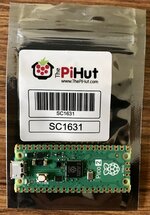 | |
| Posted by: Snial on 2024-08-17 12:07:18 Modern compiler toolchains infuriate me with their inane complexity! I've tried about 3 different ways to be able to install the Raspberry PI Pico toolchain. Stupid <expletive> cmake!!! Why not just ordinary makefiles??!?!!?!?!?!?! Anyway, I tried installing the tools manually to begin with. Then I tried vscodium (you might ask why I don't just install vscode, but I hate Microsoft so much I'd do anything else than support their empire), but I never figured out how to get vscodium to pick up the right paths for arm-none-eabi-gcc; the pico sdk and pico examples. And this stuff should be easy! Finally, I've been trying to use eclipse. Actually I've been fairly comfortable with eclipse, but again, it's a <expletive> cmake conflict. The Raspberry PI PICO getting started manual tells you how:
(that's a bad instruction, because it absolutely matters what that path is, the implication is that it should be the path to the pico-examples-eclipse folder your've just created). $ cmake -G"Eclipse CDT4 - Unix Makefiles" -DCMAKE_BUILD_TYPE=Debug ../pico-examples And it's this line that fails. I really don't understand that freakin' cmake CLI gibberish, life's too short to build your life around the arcane command line options of every tool, so I'm just treating that guff like magic. Unfortunately, regardless of whether I have PICO_SDK_PATH=~/Development/pico/pico-examples-eclipse or PICO_SDK_PATH=~/Development/pico/pico-examples it complains that: CMake Error at pico_sdk_import.cmake:68 (message): Directory '/Users/julianskidmore/Development/pico/pico-examples-eclipse' does not appear to contain the Raspberry Pi Pico SDK Call Stack (most recent call first): CMakeLists.txt:4 (include) Well, of course it bloomin' doesn't, because that's where the conversions are supposed to be stored! Any Ideas? (please don't just tell me to install vscode). Oh my goodness, even if I cd to the pico-examples AND set the PICO_SDK_PATH to pico-examples, I still get the same error message!!!?!? How can it possibly know what the target directory is if nothing specifies it?!?!?!!! Modern development tools: a swamp within an ocean of sewage. | |
| 1 > |