68kMLA Classic Interface
This is a version of the 68kMLA forums for viewing on your favorite old mac. Visitors on modern platforms may prefer the main site.
| Click here to select a new forum. | |
| Mac Classic 2 bodge wire | |
| Posted by: gkmaia on 2020-07-10 11:18:28 I am going over a classic II board and my one has this blue bodge wire. Looking at some photos at the web I see quite a few boards with similar bodge. Do anyone know what is the purpose of that? Is it a factory fix or DIY upgrades? Looking at bomarc's schematics I see the connection. Can anyone help clarify? Also, do anyone know if pin 23 of U10 is connected also to that through hole eight near it? 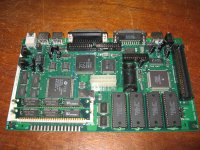 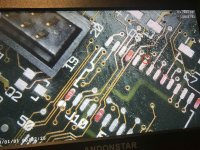 | |
| Posted by: Daniël on 2020-07-10 20:04:09 The bodge wire is a factory fix, most Classic II boards of that revision have it. | |
| Posted by: Trash80toHP_Mini on 2020-07-11 01:47:09 Just curious, no criticism implied: Bodge (To do a clumsy or inelegant job, usually as a temporary repair; mend, patch up, repair.) has the wrong connotations for factory rework, which is very different today. It was an accepted industry practice some 30 years ago. PCB costs were high and skilled labor for testing and doing such fixes to 10mil/5mil tech PCBs was available and relatively inexpensive. While not elegant, rework patch wiring was done to a high standard as a permanent solution for design flaws, batch production glitches and individual boards that failed testing. The trace fixes we regularly do today "to mend, patch, repair" our damaged boards would not be considered bodge wires if done in a workmanlike manner, while fugly fixes would. [😉] Are the connotations a bit different in the Netherlands? Very curious about that. Wictionary: Middle Dutch botsen, butsen, boetsen (“to repair, patch”) | |
| Posted by: Cory5412 on 2020-07-11 02:49:23 I wouldn't think too hard about it. I've seen bodge used in this context several times, even in scenarios where a thing was done well but it's obvious that the repair isn't ideal and/or the need for the repair isn't ideal. Once tolerances and timings tightened up enough, this kind of fix became unworkable/unreliable and so in relation to the way a faulty board might be tossed or reworked today (or even, IDK, in 1998) I'd say "bodge" is fair. The practice was normal, but it arguably wasn't the best possible repair, it just happened to be good enough and professionally installed and secured. Due to increasing speeds and decreasing timing tolerances, "factory rework" had to change a lot through the course of the '90s, which is almost certainly why we don't see this kind of fix on significantly newer machines. | |
| Posted by: Daniël on 2020-07-11 07:44:35 Not to drag it too off-topic, but just to clarify, "bodge" in my view refers to the fact something in the final PCB design was "bodged", and had to be fixed after the fact. It's not in reference to the quality of said fix. | |
Posted by: Trash80toHP_Mini on 2020-07-11 08:45:15Due to increasing speeds and decreasing timing tolerances, "factory rework" had to change a lot through the course of the '90s, which is almost certainly why we don't see this kind of fix on significantly newer machines. Exactly, SMT connection pitch reductions changed everything almost overnight before about 1995. I thought it was interesting to compare the early 90s meaning of rework to that PCB mfr's use of the term. Not to drag it too off-topic, but just to clarify, "bodge" in my view refers to the fact something in the final PCB design was "bodged", and had to be fixed after the fact. It's not in reference to the quality of said fix.As I said, I wondered if there were different connotations in your native language than there appears to be in English, interesting. :approve: | |
| 1 |