68kMLA Classic Interface
This is a version of the 68kMLA forums for viewing on your favorite old mac. Visitors on modern platforms may prefer the main site.
| Click here to select a new forum. | |
| What IDE adapters are you using? | |
Posted by: BespokeMan on 2024-09-03 16:56:18What do you mean by FW or USB? I use a SD to IDE adapter and put it in an external enclosure that connects to my Pismo via Firewire or USB. | |
Posted by: LaPorta on 2024-09-03 17:07:31I use a SD to IDE adapter and put it in an external enclosure that connects to my Pismo via Firewire or USB.Not even sure how that would complicate things. Why not just get a USB-based SD card reader? | |
Posted by: BespokeMan on 2024-09-03 19:35:44Not even sure how that would complicate things. Why not just get a USB-based SD card reader? I don't believe it can do the low level formatting required. Also, I don't have one. | |
| Posted by: BespokeMan on 2024-09-03 19:42:33 I've successfully installed Mac OS 7.6 to my PowerBook 3400c! For those wondering here's how I did it. I popped my SD card into my Pismo using the SD to IDE adapter. Booted into OS 9 Boot Kit v2 on a USB flash drive then formatted the SD card into 3 partitions using Drive Setup. I took out the SD to IDE adapter and plugged it into my Pismo via Firewire then ran the PowerBook 3400 Restore CD. I placed the SD to IDE adapter inside my PowerBook 3400c and voila! 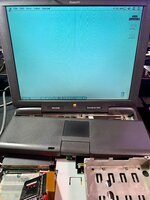 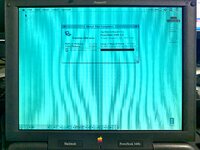 | |
| Posted by: LaPorta on 2024-09-03 19:44:14 Just for future reference, formatting in an SD card reader works just fine for this purpose, there is no issue. Glad you got it to work! | |
| Posted by: Big Ben on 2024-09-03 23:19:50 Disk Setup is only able to deal with disk attached to SCSI and IDE internal controllers. I don’t recall being able to deal with FW, not able to deal with USB for sure. Also don’t do low level format on flash based device, it just wear the card, not dramatic but not a good practice. Anyway congrats, good to see you managed to get it up an running! | |
Posted by: BespokeMan on 2024-09-04 00:20:04Disk Setup is only able to deal with disk attached to SCSI and IDE internal controllers. I don’t recall being able to deal with FW, not able to deal with USB for sure.Yes, the option to initialize was grayed out in Drive Setup. That’s why it wouldn’t work even with a USB sd card reader, @LaPorta. | |
| Posted by: MacUp72 on 2024-09-04 01:55:08 well done.. the display (on the photo at least?) looks to have a blueish tint, so maybe the fluorescent tube in it is on the way out.. | |
Posted by: LaPorta on 2024-09-04 02:04:43Yes, the option to initialize was grayed out in Drive Setup. That’s why it wouldn’t work even with a USB sd card reader, @LaPorta.Indeed, if you do it that way I suppose. If you did it under OS X, Disk Utility would work ok with the SD reader. | |
Posted by: BespokeMan on 2024-09-04 05:14:11well done..Most definitely. Need to start looking for a replacement. | |
| Posted by: BespokeMan on 2024-09-11 21:06:40 Same SD to IDE adapter works inside a PowerBook 5300cs. 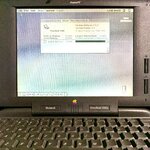 | |
| Posted by: TrueNorthStrong on 2024-10-04 19:14:35 Since I just went through this whole process with my 3400c I figured I'd provide some input. LaPorta dropped a comment in my thread about looking in to an SD to IDE adapter instead of the CF to IDE I was using. I went out of my way to ensure the CF card had UDMA, I read online that was needed, and a relatively old card with a small capacity (2GB). It did work but was a bit strange and unstable. After installing a driver, the system locked up and then would no longer boot successfully. The SD card adapter (the same one posted earlier in the thread) worked a charm for me. I made up my 8.6 image in SheepShaver and just used dd to "image" the SD card. I did use disk Jockey to convert it to a drive image, though I suspect this step was not necessary. If you're having issues with CF, I'd highly recommend that SD adapter. I bought mine along with a 3D printed carrier so it can be seated inside safely. My guess as to why. CF cards are IDE pin compatible but present themselves as removable devices. UDMA is supposed to ensure it doesn't, and there's a billion and one technical details about this. But hunting down the specific card to meet these requirements can be iffy. This is all to say, the presentation of the storage medium to the system is the card's responsibility, since the adapter is largely passive. With an SD card adapter, the adapter is active and must handle the "presentation" to the system. Since it's intended to replace an internal hard drive, seems only natural that it would present as an internal drive and not a removable device. | |
| Posted by: Franklinstein on 2024-10-18 08:48:09 I usually prefer spinning disks in those older machines just to keep the feel. However, if I do go solid state (especially on SCSI-based PBs where replacements aren't easy to get), I tend to use CF cards under 16GB. Those older cards are usually more compatible and those old machines rarely have need of anywhere near that much space. SCSI-to-SD adapters usually use any card but I still usually won't use anything bigger than about 16GB (HFS is very inefficient with large volumes and SCSI PowerBooks won't boot HFS+ volumes). Regardless, I always max RAM so I can turn off VM. Even a cheap flash disk will last nearly forever so long as they're not getting hit with constant writes from VM. (offer not valid under OS X - that OS constantly writes to the disk and it can't be turned off without adversely affecting the system). | |
| Posted by: sunvalleylaw on 2026-03-16 16:42:24 Ok, needing to figure this out for a 180 MHz 3400c I now have. Along with RAM. Have a line on a Buffalo 128k Ram module I think I am hopping on. | |
| < 3 |